

Editor’s note: This is part two of a seven-part series that unpacks each pillar of the Vizient AI Maturity Assessment, sharing lessons from our work with leading health systems and practical steps to build maturity across every stage of the AI journey. Read part one to explore an overview of the AI maturity framework and its six pillars.
Health system executives are hearing the same message from all sides: AI is accelerating, adoption is expanding and failure to act risks falling behind. AI adoption is increasing across three categories:
- Embedded AI features within existing platforms like Microsoft CoPilot or an EHR’s AI tools
- AI-native point solutions from startups and vendors
- Homegrown models and automations built internally to streamline workflows or augment decision-making
Yet amid this momentum, most organizations face a stark paradox: measurable value remains elusive. While some health systems are making strides, the vast majority remain stalled in experimentation. Only a fraction have scaled AI successfully across their enterprises and achieved durable ROI.
The first step to breaking this cycle is elevating AI from a patchwork of fragmented tools to a strategic, enterprise-wide capability. AI maturity isn’t about how many tools you deploy—it’s about building the institutional muscle to consistently select, implement and scale AI solutions that generate measurable results. In Vizient’s AI Maturity Model, strategy is the foundation upon which all other pillars are built. As with any transformational capability—robotic surgery, hospital at home, gene therapy—AI must be embedded in the organization’s strategic plan to be taken seriously and be sustainable. Otherwise, it remains a side project, disconnected from the system’s mission and outcomes.
This gap is not theoretical. BVP’s AI Adoption Index found that only half of healthcare organizations report having a clear AI strategy. In Vizient’s own Member Networks survey, just one in three systems say they have a robust strategy in place. IBM’s C-suite study echoes this as only 25% of AI initiatives to date have delivered the expected return on investment.
By contrast, systems that incorporate AI into their strategic planning process are far more likely to fund it, track it and scale it. High-performing organizations approach AI as they would any major investment—assigning ownership, aligning initiatives with outcomes and adjusting course based on performance.
A robust AI strategy connects technology to business value. It accelerates implementation, reduces redundancy, manages risk and speeds up adoption across the organization. Most importantly, it ensures AI initiatives aren’t reactive experiments, but proactive drivers of quality, efficiency and growth.

Aligning AI to enterprise strategy
Building a system-wide AI strategy starts with alignment against an organization’s long-term strategic direction. AI should be a capability that strengthens and / or accelerates the potential of specific initiatives that advance core system goals related to growth (e.g., expanding addressable market, increasing essentiality), transformation (e.g., strengthening workforce sustainability, diversifying profit streams), and performance improvement (e.g., improving quality, controlling cost, enhancing patient experience). When AI-enabled initiatives are tied to outcomes linked to the specific incentives for the system, they earn executive mindshare and budgetary support.
Organizations that succeed with AI anchor their focus in real problems, not just technological curiosity. For example, industry-wide issues managing acute bed capacity heighten in importance given the rising cost of construction (and balance sheet challenges) associated with simply building a new patient tower. In this scenario, a multi-faceted, multi-year roadmap could look like:
- Year 1: Targeted use of point solutions (e.g., AI-powered scribe to reduce physician burden, AI-enabled engagement within a chronic care management platform)
- Year 2: Predictive analytics to reduce readmissions
- Year 3: AI-driven command center for throughput and resource optimization
Each initiative should ladder up to enterprise KPIs—whether reducing physician burnout, improving length of stay or increasing operating margin. Quantifying expected impact from the outset makes it easier to track success and course-correct when needed.
Just as important is sharing the organization’s purposeful usage of AI broadly. When the board and leadership team understand how AI fits into the pursuit of specific strategic priorities, it stops being “just an IT project” and becomes an enterprise-wide capability.
Finally, treat your roadmap as a living document. High-performing organizations refresh their AI strategy regularly to adjust to new technologies, clinical priorities or regulatory changes. This continuous refresh ensures AI remains aligned to the health system’s mission and responsive to the fast-moving market.
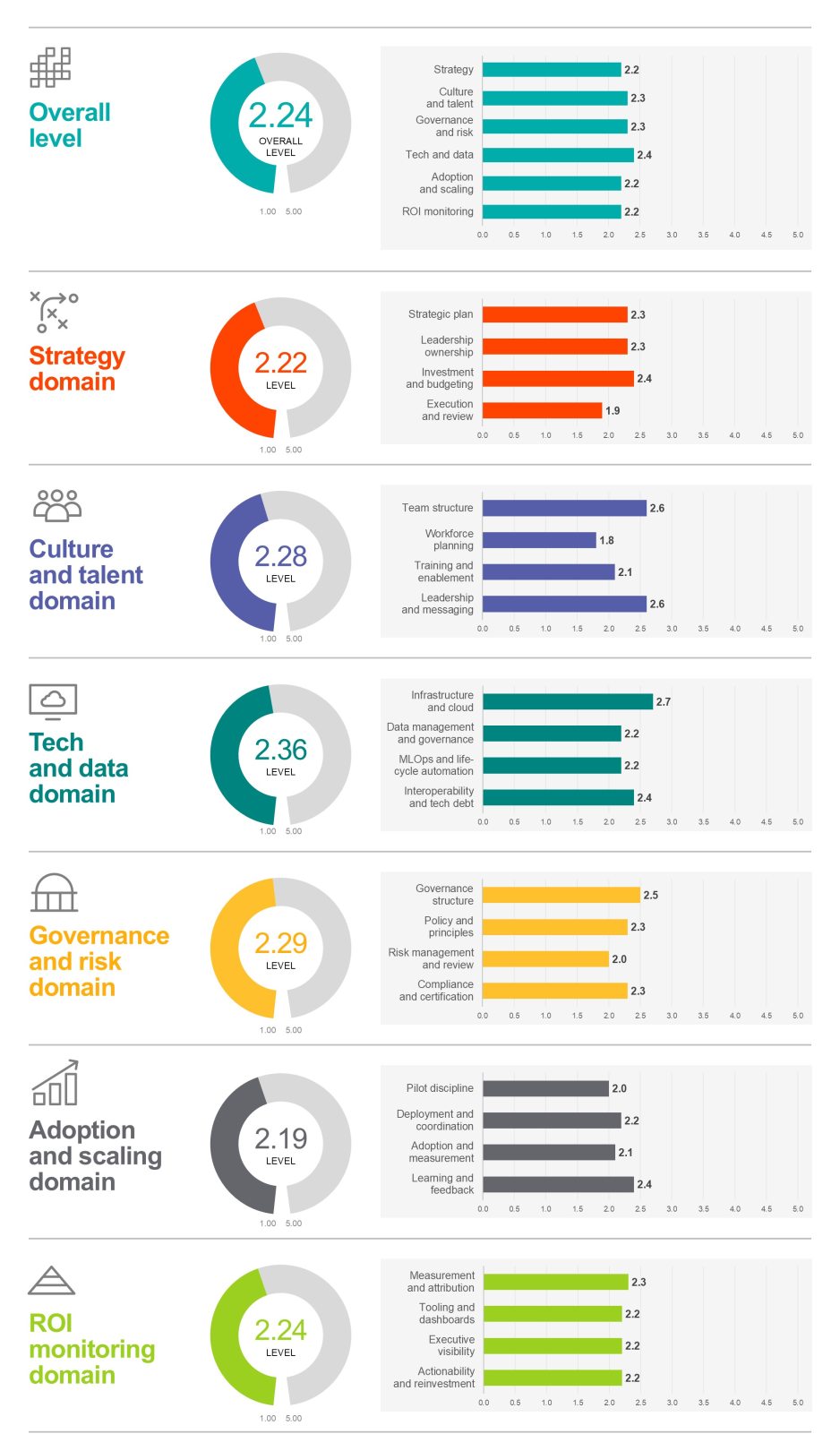
Figure 1. The current state of AI maturity, based on 46 responses from hospital and health system leaders.
Executive ownership ensures continuity
Effective execution requires clear ownership. Appoint a senior executive—VP or C-suite—as the system’s AI lead. This could be a chief digital officer, chief AI officer, or another leader with operational fluency and innovation credibility. The key is that someone wakes up every day thinking about how AI contributes to the organization’s success.
Executive sponsorship correlates with ROI. In Google Cloud’s AI Survey, 78% of executives in organizations with C-level sponsorship report achieving ROI on at least one generative AI use case—higher than peers without executive alignment.
In early stages, AI leadership may be a shared or part-time role (e.g., the CMIO or VP of innovation). But as AI matures, systems should consider dedicated leadership, reporting to the CEO or COO, with formal oversight and funding authority. Governance follows ownership as an AI lead becomes the focal point for evaluating proposals, aligning resources and ensuring integration across departments.
Prioritize and fund what matters
Strategy without prioritization leads to scattershot execution. Many systems get caught up chasing vendor demos or reacting to the “AI tool of the month,” while others build homegrown solutions in isolation without a clear line of sight to system goals. A structured intake process helps filter promising ideas from distractions.
Develop a lightweight but rigorous AI proposal process. At a minimum, require teams to define:
- The problem to be solved
- Strategic alignment to system goals
- Projected clinical, financial or operational benefits
- Total cost of ownership
- Implementation readiness
Use a standardized scoring rubric (e.g., strategic fit, feasibility, risk, ROI) to evaluate proposals consistently and transparently. Some systems conduct quarterly prioritization cycles using this method.
Funding strategy should evolve with maturity. In early stages, consider carving out 1–2% of innovation or IT budgets for rapid pilots. As capabilities grow, formalize AI as a line item in the capital planning process. McKinsey notes leading organization allocate 20% of their digital budgets to AI—a signal of intent and an enabler for scaling success. Importantly, tie funding to measurable outcomes. Fund what works, retire what doesn’t and reinvest gains.

From plan to action: Execute, learn, adapt
The best strategy is worthless without execution. Systems must build mechanisms to track progress, measure results and adjust in real time. Unfortunately, many organizations fail to monitor AI projects post-implementation—losing the chance to learn from what worked or didn’t.
Begin by maintaining a centralized registry of AI projects, including department, owner, status, investment level and impact metrics. Review it quarterly with system leadership. Incorporate AI updates into operational reviews or board committee meetings. These reviews don’t have to be lengthy, but they should be routine and performance focused.
Additionally, make your strategy dynamic. AI is evolving rapidly and your roadmap should too. Set a cadence to revisit assumptions, sunset outdated initiatives and explore emerging opportunities. This mindset shift from a static plan to a continuous learning system is what distinguishes mature organizations from those stuck in perpetual pilot mode.
Executive actions to drive strategic AI maturity
- Make AI a board-level topic. Integrate AI into enterprise strategy discussions and planning cycles, not just IT roadmaps.
- Appoint an AI executive sponsor. Assign clear ownership to a respected leader accountable for driving impact.
- Develop a living AI roadmap. Align AI initiatives to system-wide goals and update it regularly as conditions evolve.
- Fund what matters. Establish transparent prioritization and shift funding toward high-ROI, scalable solutions.
- Measure relentlessly. Track adoption, impact and learnings from each AI initiative. Use insights to refine strategy.
- Institutionalize iteration. Reassess your AI roadmap annually (at a minimum) to stay ahead of market and technology shifts.
Part three: In our next post, we’ll explore the culture and talent domain of the Vizient AI Maturity Model, sharing practical ways to empower your workforce and build a digitally fluent organization ready for AI at scale.