

As the calendar turns and the weather improves, many of us take stock at home. We clear closets, scrub corners and dig into long-ignored projects. Sometimes a surface wipe-down is enough. Other times, the job calls for real repair.
Hospitals should treat workforce productivity the same way. Before shifting roles or cutting positions, take a hard look at the structure itself.
The word “productivity” tends to trigger anxiety. It suggests finance reviews, variance reports and FTE reduction targets. The conversation often collapses into a headcount exercise—a reflex is understandable, but counterproductive.
Lasting improvement requires more than surface adjustments. You examine how the work flows, where it stalls and what is broken upstream. Workforce productivity should follow that sequence: stabilize and redesign the system before reducing the number of people working within it.
Productivity is reported in finance but created in operations. When it becomes a staffing ratio exercise, organizations risk trimming capacity while leaving structural inefficiencies intact. This is because in many hospitals, years of incremental decisions have created operational clutter. Roles are fragmented, schedules reflect habit rather than demand, manual workarounds persist and data live in parallel systems. It was not planned this way, but it developed over time. What appears as excess labor is often the byproduct of many choices, made with the best of intentions but independently of each other.
Where to look for the clutter
Take the operating room. A daily schedule may look full on paper, but a closer review can reveal extended gaps between cases while staff remain on the clock. Those idle intervals consume hours but rarely attract attention. Redesigning block schedules, tightening case sequencing and reducing avoidable delays can unlock capacity without adding staff and in some cases without keeping rooms open late. The gain comes from cleaning up the workflow, not cutting FTEs.
The same pattern shows up in less visible areas. In food and nutritional services, we have observed teams manually reenter identical nutritional data for common ingredients each time a new recipe is created. Each task is small, but the cumulative burden adds up. Viewed only through hours per unit, the department may look overstaffed; but viewed operationally, it is burdened by avoidable process waste.
Shadow roles compound the problem. A system may maintain an enterprise project management office while departments hire their own project managers. Scheduling and analytics functions often follow the same path, producing multiple dashboards, inconsistent definitions and limited visibility into total capacity. This kind of fragmentation reduces flexibility and obscures the overall picture. Centralization, where appropriate, restores line of sight and enables redeployment when demand shifts.
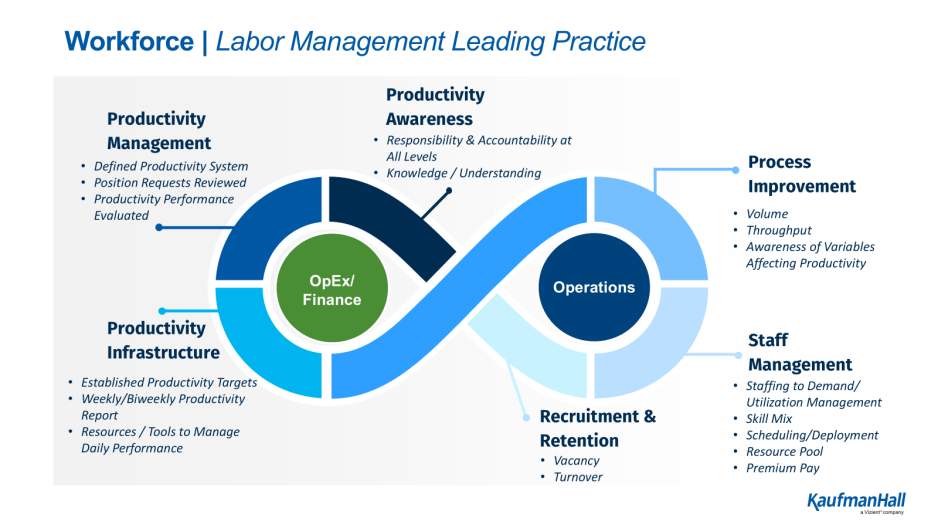
Many productivity efforts stall because they live almost entirely within finance. Reports are built, benchmarks are cited, variances are flagged. Operational leaders receive summaries without clear translation into day-to-day decisions. But telling a nurse manager that hours per patient day exceeds target by a fraction offers little direction. Showing hourly census patterns alongside staffing levels invites action: adjust shifts, reconfigure coverage, rethink float deployment. One is a report; the other, a management tool.
Timing matters as well. Retrospective monthly reviews confine leaders to explanations after the fact. Forward-looking schedule management allows course correction before costs are locked in.
The goal of spring cleaning: clarity in our space
Finance and operations must jointly own the agenda. When operational leaders help build budgets and define volume assumptions, they understand how FTE targets are derived. Conversely, when finance understands workflow constraints, targets become more credible. Without that partnership, productivity efforts quickly feel adversarial.
The pressure to improve labor productivity is real, and staff reductions are sometimes necessary. But sequence matters. Cutting FTEs before addressing fragmented roles, misaligned schedules and inefficient processes simply spreads the same inefficiency across fewer people. The disciplined response is a systematic cleaning of the house, not cosmetic decluttering: centralizing where scale adds value, standardizing data, aligning schedules to demand and translating metrics into action.
When organizations approach productivity as a spring cleaning rather than a headcount drill, the conversation changes. The goal becomes ensuring that every labor hour contributes meaningfully to patient care and organizational performance. Before defaulting to workforce reductions, leaders should inspect the systems they have built. In many cases, the mess is structural. Fix the house first.
Before cutting staff, do these four things
- Fix the schedule before fixing the headcount
Analyze gaps, turnover times and block utilization. Align shifts to actual hourly demand before declaring a staffing variance. - Surface and consolidate fragmented roles
Inventory project managers, analysts, schedulers and similar functions across departments. Quantify total FTEs and workload, then centralize where scale improves flexibility and transparency. - Eliminate manual work and parallel reporting
Identify duplicative data entry, spreadsheet workarounds and inconsistent dashboards. Standardize definitions and automate repetitive tasks. - Make productivity a joint finance–operations discipline
Move beyond retrospective variance reports. Build productivity targets into budget assumptions and schedule design, with shared accountability.