

The American Indians and Alaska Natives in the United States, although strong and resilient, have long faced seemingly intractable challenges to health and healthcare.
The health disparities of these populations are striking, including the lowest life expectancy among all racial and ethnic groups in the country and significantly higher prevalence of cancer, heart disease, and chronic obstructive pulmonary disease. Along with many economic and social factors, these disparities are exacerbated by barriers to healthcare access, including chronic underfunding of the Indian Health Service (IHS)—the primary entity delivering care to these populations—resulting in limited services, outdated facilities, and staffing shortages.
With the entire U.S. healthcare system experiencing rising costs and legislative attempts to reduce reimbursement, Indigenous populations could see their longstanding, systemic challenges intensify and therefore the need for creative solutions increase.
One such solution was recently enacted at Sage Memorial Hospital (Sage), an Arizona-based, 25-bed critical access hospital located within the Navajo Nation and operating on 110 acres of Presbyterian Church-leased land within Apache County, Arizona. Sage is designated as a Tribal Health Corporation by the Navajo Nation and plays a critical role in providing high-quality, culturally sensitive healthcare to the Navajo community.
Sage, and the population it served, faced a critical need for updated health facilities: a modern hospital that would provide state-of-the art care—including a surgery department, something the hospital had never offered, labor-and-delivery services that would reduce the need for long travel times—a new outpatient clinic, and much needed multifamily workforce housing. Although Sage could secure funding from the federal government through the Indian Health Service to rent facilities, there was no construction financing solution or other path to get the facilities actually built in remote Ganado, Arizona.
Overcoming Complexities
Despite the intensity of the need, the capital for this crucial investment seemed out of reach, not only because prior efforts had stalled, which depleted the hospital’s balance sheet due to construction spending, but because Sage’s path to capital access was complex and unfamiliar to the credit markets.
For Sage, that complexity presented in numerous ways. There was legal complexity, a unique revenue structure that was new to the capital markets, and balance sheet complexity to explain to investors. Thus, the broadest challenge facing Sage was to structure a transaction and investor communication strategy that translated the complexity and uniqueness of Sage’s situation into a clear and attractive opportunity to participate in Sage’s capital solution. This is the task that Kaufman Hall and its partners undertook.
Unique legal status
Sage is an Arizona 501c3 and Tribal Health Contractor under Public Law 93-638, the Indian Self-Determination and Education Assistance Act (ISDEAA). The Navajo Nation, a federally recognized Tribal Entity, designates Sage as an authorized Tribal Health Corporation, which allows Sage to contract with the Indian Health Service to provide care. The land on which Sage operates is owned by the Presbyterian Church rather than the Nation and is leased to Sage on a long-term basis.
Sage’s security package, covenants, and potential investor remedies all had to account for this unique legal structure. We had to be able to explain how this structure works and why it is beneficial for Sage. Investors needed to understand that they could find a workable security framework. We worked extensively with counsel and investment bankers to design a structure that balanced Sage’s operating flexibility needs with the security and risk management desires of investors. Ultimately, the structure was accepted by the market and Sage received investment from several large and well-known institutional investors.
Unfamiliar revenue structure
Sage is primarily funded by a number of programmatic IHS revenue sources. An Annual Funding Agreement, under the ISDEAA, is executed by and between Sage, on behalf of the Navajo Nation, and Indian Health Service. The Annual Funding Agreement transfers full control of, and the funding for, health care programs, services, functions, and activities to tribal organizations to promote the federal policy of self-determination.
The ISDEAA requires the Indian Health Service to enter leases with tribes (upon request) for the administration and delivery of services under the ISDEAA. Under the lease agreements, the Indian Health Service must compensate the tribal organization for the use of the facilities. The Service also provides funding through other complex lease arrangements, including the 105(l) lease program, which is designed to fund facilities rental but does not directly fund construction, presenting challenges for tribes in remote areas. Sage also receives and collects third-party revenues from Medicare, Medicaid, and private insurers.
We felt, prior to the deal facing the market, that many traditional healthcare investors may not be familiar with these Indian Health Service funding sources. Understanding that in advance, we needed to ensure focus on developing and communicating Sage’s unique story, while being sensitive to the key elements the market would need to understand—and ensure that we identified, in advance, the likely questions that would arise.
Liquidity needed before closing
Sage spent many millions of its own cash on the new hospital prior to closing on the bond transaction. In their efforts to complete the new facility, their liquidity situation became challenging.
We made sure Sage had a common foundation from which to understand the current cash trajectory. We were able to source, on a very short timeline, a liquidity stop-gap financing to bridge the organization to the ultimate long-term recapitalization it would achieve with the closing of the financing.
What Was Accomplished
Kaufman Hall and our partners managed to translate this complexity—which at times seemed overwhelming—into funding for Sage, and equally important, into a repeatable playbook other providers could use to access funding for new healthcare facilities in disadvantaged markets providing care to disadvantaged populations.
On December 18, 2024, Blaylock Van, LLC, as underwriter, and Kaufman Hall, as municipal advisor, served as key partners in closing the $80 million Arizona Industrial Development Authority Hospital Revenue Bonds (Navajo Health Foundation–Sage Memorial Hospital, Inc. Project) Series 2024 transaction.
The transaction was perhaps amongst the first examples of an unrated tax-exempt bond successfully closed for a hospital with an entirely indigenous governing board and management team.
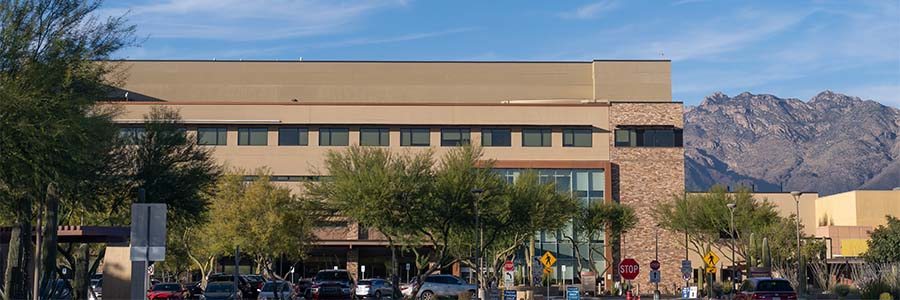
The innovative financing recapitalized the construction of a state-of-the-art 140,000-square-foot hospital, including 16 inpatient beds, two operating rooms with eight pre/post-op bays, three labor and delivery rooms, two postpartum rooms, and a four-bed ICU. A 24/7 emergency department offers two trauma bays and eight exam rooms, backed by advanced imaging. Outpatient and specialty services comprise 30 exam rooms (including telehealth), five specialty clinics, rehabilitation therapy, nine optometry rooms, 12 dental operatories, a full pharmacy, and complete lab/microbiology services. Proceeds of the transaction also funded a 27-unit housing complex for healthcare professionals.
Opened in August 2024, the new hospital is transforming health care for the Navajo Nation and surrounding communities.
What Was Special
This past December, Kaufman Hall was enormously pleased that this transaction received the municipal finance industry’s highest honor: The Bond Buyer’s National Deal of the Year Award. In bestowing this award, the Bond Buyer did an excellent job encapsulating what made this deal so special:
| It is the clarity of purpose, the precision of structure and the courage to open a door that has too often been closed. This transaction stood out for transforming access into outcomes and financial ingenuity into community impact…delivered permanent, long-term financing for a mission-critical community facility. It relied on a structure that broadened market access, even without external ratings; it aligned repayment with real operating performance while thoughtfully incorporating targeted support; and it advanced essential services in a place where distance and history have long imposed barriers. Most importantly, it charts a replicable path for others facing similar challenges. |
The grand opening of the new facility drove home another special aspect of the deal: the community pride it engendered. In a town of approximately 800 people, in a region of approximately 20,000 people spread out over many square miles, the grand opening had approximately 4,000 attendees and included speeches from both the former and acting presidents of Navajo Nation, and the acting head of Indian Health Services.
For these attendees, and for the region as a whole, the ability to access this funding helps support the essential principles of self-determination—sovereignty, autonomy, and cultural preservation.
In even broader terms, the effort involved in this transaction represents, we believe, the application of optimism, ingenuity, and creativity to the often-intractable problems of U.S. healthcare for indigenous populations. Such optimism, ingenuity, creativity is more necessary now than ever before.
Please note that content included on this page includes testimonials, as defined by MSRB Rule G-40. These testimonials originated from an individual not affiliated with a current municipal advisory client. These testimonials may not accurately represent the experiences of all clients and should not be interpreted as a guarantee of future performance or success.