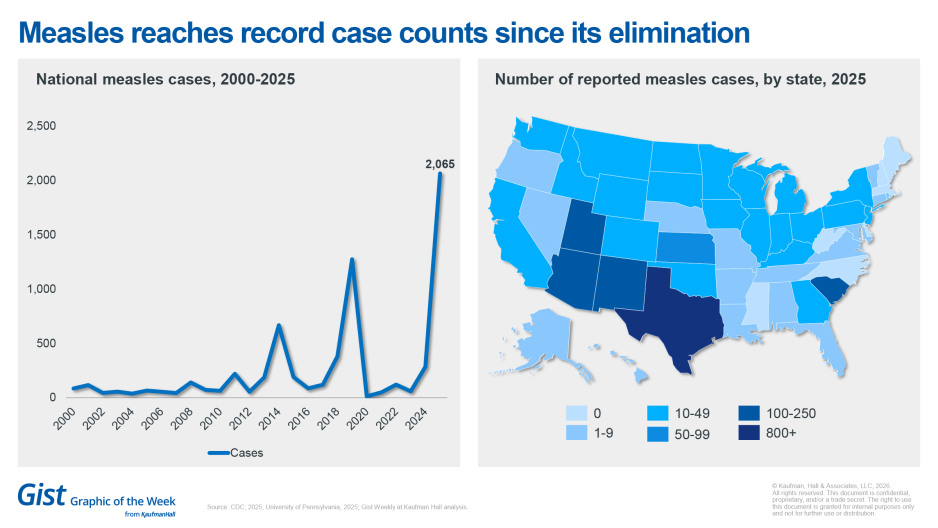


Last year, the United States experienced its worst measles outbreak in more than three decades, with more than 2,000 confirmed cases reported by the CDC across 49 outbreaks nationwide. Approximately 93% of cases occurred among unvaccinated individuals. As measles cases continue to rise, a national survey conducted in November and December by the Annenberg Public Policy Center of the University of Pennsylvania found a small but statistically significant decline in the proportion of Americans who would recommend the measles/mumps/rubella (MMR) vaccine to someone in their household. The survey also identified diminished public perceptions of the safety and effectiveness of the MMR vaccine, as well as vaccines for seasonal flu and Covid-19. Despite these declines, the public continues to view vaccination as the most effective defense against diseases like measles. About 11% of patients are still being hospitalized for measles, so hospitals may need to be ready to employ isolation precautions to prevent in-hospital spread. Measles was officially eliminated in the United States in 2000, which means the country had not seen large outbreaks and had not had 12 months or more of uncontrolled domestic transmission of the virus; but that status now appears to be in question.